Was BCCI Forcing Rohit and Kohli to Play Domestic Cricket? The Big Truth Revealed
Contents7
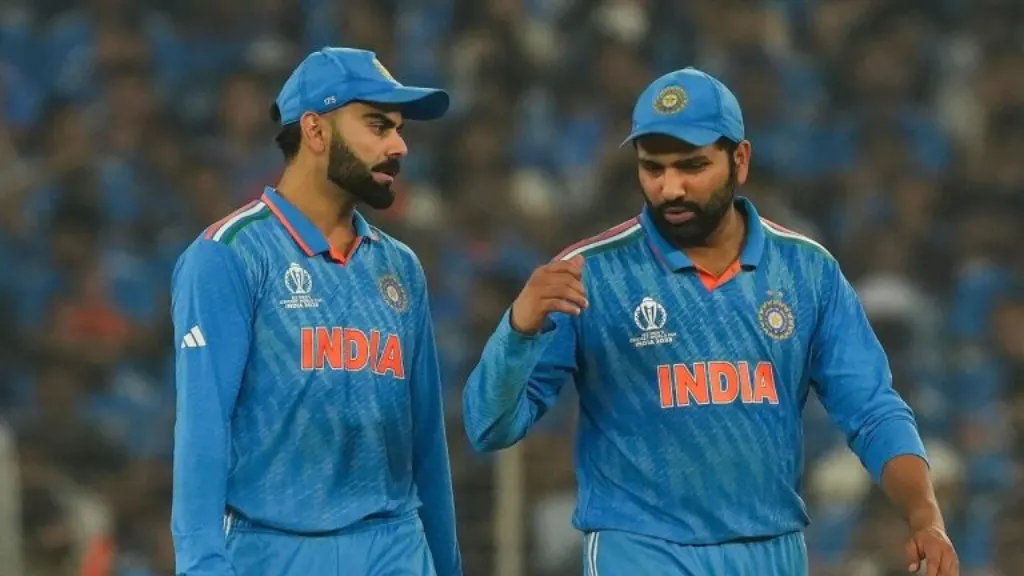
Recently, there has been significant speculation regarding whether the BCCI was pressuring Rohit Sharma and Virat Kohli to participate in domestic cricket. Following their impressive performances in the ODI series against South Africa, where Kohli scored a remarkable 302 runs, and Sharma contributed with 146 runs, both players are now set to face New Zealand in an upcoming ODI series. Despite earlier reports suggesting that playing in the Vijay Hazare Trophy was essential for their future in One Day Internationals, a BCCI official clarified that the Board did not enforce any requirements upon them. It seems that the decision for both legends to play in the domestic circuit is a personal one, confirmed by their involvement in the Vijay Hazare Trophy, set to commence shortly.
Related reading : Why Can’t Virat Kohli and Rohit Sharma Play Domestic Cricket Like Sachin Tendulkar Did?…
In the world of cricket, questions often arise about the decisions made by cricket boards and the implications they hold for players. Recently, the Board of Control for Cricket in India (BCCI) found itself at the center of controversy surrounding two of India’s biggest cricketing stars, Rohit Sharma and Virat Kohli. Following their spectacular performances in the One Day International series against South Africa, speculations emerged that the BCCI was pressuring these legends to play domestic cricket as part of a strategy for their future. This article uncovers the truth behind these claims and clarifies the stance taken by the board regarding domestic competition participation.
The Context of Domestic Cricket Mandate
The backdrop to this discussion stems from the aftermath of India’s disappointing loss in the Test series against South Africa. Amidst discussions of player fitness and future prospects, reports circulated that in order for Rohit and Kohli to qualify for the 2027 World Cup, they would need to participate in the Vijay Hazare Trophy. It had earlier been mandated that contracted players must take part in domestic cricket to be considered for selection in the national team.
Understanding BCCI’s Position
A clarification from the BCCI soon followed, addressing the supposed « mandate ». Contrary to the assumptions floating around, officials clarified that neither Rohit nor Kohli were forced to participate in domestic cricket. According to a BCCI official, the decision to play was ultimately made by the players themselves. This sentiment indicates a degree of independence enjoyed by such esteemed players rather than coercion from the board.
The Role of BCCI Selection Committee
BCCI’s Selection Committee, led by Ajit Agarkar, along with head coach Gautam Gambhir, has been actively advocating for players to participate in domestic cricket whenever possible. The intention behind this encouragement is to maintain competitive edge and enhance match fitness, particularly leading up to significant international tournaments. However, it seems that each player’s involvement is voluntary rather than obligatory.
The Performances That Shushed Doubts
Both Rohit Sharma and Virat Kohli silenced their critics with impressive displays during the ODI series against South Africa, with Kohli amassing over 300 runs at an astounding average of 151. His performance included two centuries and one half-century, while Rohit chipped in with 146 runs, featuring two half-centuries as well. Their exceptional form has raised questions: Why would they even need to play domestic cricket when they consistently perform at an international level?
Future Implications for Kohli and Rohit
As the cricketing calendar progresses, both players are scheduled to feature in the upcoming ODI series against New Zealand, followed by participating in the Vijay Hazare Trophy 2025-26. The voluntary nature of their participation reflects a commitment to the sport rather than an obligation imposed by the BCCI. Hence, engagements like this could be pivotal not just for the players but for reinforcing their legacy in Indian cricket.
Conclusion of the Matter
The narrative surrounding Kohli and Rohit’s participation in domestic cricket appears to be fuelled by misunderstanding and speculation. With the BCCI not formally mandating participation, it is clear that the IPL stalwarts are free to make their own cricketing choices, reflecting their passion and dedication to the game.
Comparison of BCCI’s Stance on Domestic Cricket for Rohit and Kohli
Read next
 Cricket News
Why Can’t Virat Kohli and Rohit Sharma Play Domestic Cricket Like Sachin Tendulkar Did? Insights from Former Cricketers
Why Can’t Virat Kohli and Rohit Sharma Play Domestic Cricket Like Sachin Tendulkar Did? Following India’s dismal 0-3 def
 Cricket News
BCCI Calls Meeting on Virat and Rohit’s Future: Demands Fitness Plan Until 2027 World Cup, Focuses on Domestic Cricket
BCCI Calls Meeting on Virat and Rohit’s Future The BCCI has scheduled a pivotal meeting regarding the future of Virat
 Cricket News
Will BCCI Demote Virat Kohli and Rohit Sharma from Central Contracts? Announcement on Shubman Gill’s Promotion in Upcoming Meeting!
The upcoming BCCI Annual General Meeting (AGM) scheduled for December 22 is set to make pivotal decisions regarding the
 Cricket News
Fans of Virat and Rohit will rejoice with this move from Cricket Australia, something BCCI overlooked
Fans of Virat Kohli and Rohit Sharma will have reason to celebrate as Cricket Australia plans a grand farewell for