Patriotism vs. Profit: Why is India Playing Against Pakistan in the Asia Cup?
Contents11
The Asia Cup has kicked off, but the real anticipation lies in the upcoming match between India and Pakistan. Amid rising voices calling for a boycott, many question the decision to hold this game so soon after the tragic Pahalgam attack and India’s Operation Sindoor. The atmosphere around the match feels tense, with less enthusiasm than usual. Fans express their anger on social media, and ticket sales are notably low. The Indian government has declared it will not engage in bilateral matches with Pakistan, yet allows participation in multinational tournaments like the Asia Cup. Critics argue that the match prioritizes profit over national sentiment, highlighting a troubling conflict between patriotism and commercial gain. As the match nears, the question looms: is it appropriate to play when the pain of recent events still resonates?
The Asia Cup has kicked off this Tuesday, but for organizers, broadcasters, and fans, the real excitement will begin when India faces off against Pakistan on Sunday. This match is significant, transcending any other regular cricket encounter. However, the current atmosphere is tinged with unrest as voices calling for a boycott have intensified in India. Many are questioning the Board of Control for Cricket in India (BCCI) regarding the decision to hold the match amidst the mourning of the tragic Pahalgam attack and the aftermath of Operation Sindoor. With many feeling that this is the worst time for an India-Pakistan clash, the stadium’s typically festive vibe seems absent.
The Atmosphere Surrounding the Match
Typically, the ambiance before an India-Pakistan match resembles a grand festival, with fans flocking to ticket counters, players surrounded during practice sessions, and hotel lobbies buzzing with media personnel. However, this week, the anticipated enthusiasm is noticeably lacking. India’s practice session on Friday was tranquil, with half-empty stands and unsold tickets lingering on online portals. The usual hustle and bustle have been replaced by hesitation and even protests.
At this time, public sentiment in India is strongly against anything associated with Pakistan. For many, watching the India-Pakistan match seems like an act of ignoring the Pahalgam massacre. This clash occurs immediately after the terrorist attack in Pahalgam and India’s Operation Sindoor targeting terrorist hideouts in Pakistan-administered Kashmir (PoK). The world’s most significant cricket rivalry, usually known for its record-breaking viewership and dramatic events on the field, is now uniting India in opposition.
Calls for a Boycott of the Match
Whenever India and Pakistan face each other, emotions run high. Celebrations of victory are treated as national triumphs, while defeats can see effigies burned, players’ homes attacked, and their families threatened. However, this time, the festive preparations are starkly absent. Tickets are not selling well, and the turnout at practice sessions is low.
Just two months ago, a group of recently retired Indian stars withdrew from a match against a legendary team that was scheduled to take place the very same day they were set to clash with Shahid Afridi’s Pakistan team. It’s difficult to imagine they were unaware of Pakistan’s involvement when signing up for the tournament.
Social Media Outrage
The atmosphere on social media is leaning more towards boycott than excitement. The anger is exacerbated by the fact that several Pakistani players openly supported their country’s military policy during Operation Sindoor. Two of these players, Faheem Ashraf and Abrar Ahmed, who previously posted anti-India content, are now part of Pakistan’s Asia Cup squad. Many in India see this match as an incitement under the pretense of sport.
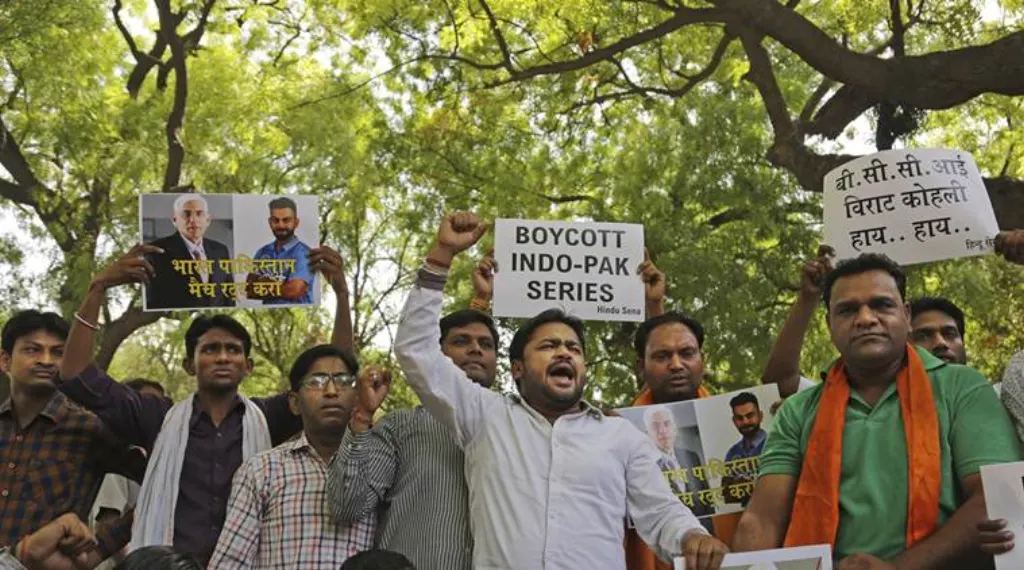
After the announcement of the match in July, just weeks following Operation Sindoor, outrage spread rapidly. Just before the match starts, hashtags like #BoycottIndvsPak are trending once again. From actors to legends, journalists, and even former Indian cricketers, many have voiced this sentiment.
Low Ticket Sales Amidst Tensions
In this lackluster atmosphere, the unexpectedly low ticket sales are also notable, especially given this match is typically regarded as a highlight of world cricket. Reports indicate that the high prices for premium packages, which include access to lounges, VIP seating, parking, food and beverages, and private entry gates, have backfired. Premium pair seat tickets ranging from ₹1.67 lakh to ₹4 lakh remain unsold, while lower-priced tickets for the stands continue to be snapped up.
Why is This Match Being Played?
So why is this match still taking place? The answer is straightforward – profit. The International Cricket Council (ICC) and the Asian Cricket Council (ACC) know that nothing sells better than an India-Pakistan clash. Television viewers pour in, advertising slots fetch premium rates, and sponsorships line up quickly. In the 2025 Champions Trophy, their encounter received a staggering 26 billion minutes of airtime, surpassing even the World Cup match scheduled for 2023. For cricket boards, these figures are crucial. The media rights for just three ICC tournaments are valued at around ₹1,400 crores, ensuring member countries will receive significant revenue, all of which would be unimaginable without India’s presence, or even more so, without an India-Pakistan matchup. In the past, the ICC has even admitted to arranging groups to ensure the two nations come face to face.
The Stance of the Indian Government
The Indian government has also tried to draw a line. In August, it was announced that India would not play bilateral matches against Pakistan, nor send players there, nor host Pakistani teams. However, it did permit matches in multinational tournaments, such as the Asia Cup or World Cup.
The BCCI states that it is adhering to this policy. IPL president Arun Dhumal confirmed on Friday, « The government has made it clear that we will not play bilateral matches and will only play against Pakistan in multiparty tournaments. We are simply following the government’s advice. »
Public Outcry and Legal Action
A petition demanding the cancellation of the Asia Cup match has even reached the Supreme Court. The plea argues that cricket should not be put above national interests and calls for the BCCI to be brought under the Ministry of Sports through the new National Sports Administration Act of 2025. However, the court has refused to list the matter for an immediate hearing.
Concern for Global Image
Two arguments underlie this policy. First, India does not want to appear unwilling to host or participate in global sports, especially when it hopes to bid for the Olympics and Commonwealth Games. Second, by limiting encounters to neutral venues and multinational tournaments, the government avoids the appearance of granting special privileges. Denying visas based on political grounds or halting participation could harm India’s reputation in the international sports community.
India may choose to avoid bilateral matches against Pakistan but cannot prevent their participation in internationally governed multilateral events. Doing so would be deemed political interference and a violation of international sports standards. The Olympic Charter clearly states that athletes cannot be hindered from competition based on race, religion, or political issues; Rule 44 prohibits such discrimination, ensuring that sports remain free from politics, even during tense bilateral relationships.
Why Does Cricket Get Different Treatment?
On Sunday, India will go head-to-head with Pakistan in Dubai. Broadcasters will profit, the ICC and ACC will share revenue, and millions of fans worldwide will tune in. However, at home, celebrations will feel muted. For families who lost loved ones in Pahalgam, for soldiers stationed at borders, and for ordinary citizens questioning the sport’s propriety, this is more than a mere cricket match.
If visa cancellations can happen, if interpersonal relations can be severed, if water treaties can be halted, why should cricket be treated differently? Is it because the economic stakes are too high, or because international reputation has been prioritized over national sentiment? Is hosting global sporting events more significant than national interests? And if boycotting ICC tournament matches risks isolation, does it fall heavily on the soul of the nation?
Who Truly Wins in This Clash?
Each encounter between India and Pakistan has always transcended the mere collision of bat and ball. However, against the backdrop of Pahalgam and Operation Sindoor, this match carries an even heavier weight. Soldiers are fighting at the borders, lives are being lost in Pahalgam, and yet, the show goes on. It raises an uncomfortable question: In this clash between profit and patriotism, who is the real winner?
As the first ball is bowled, the match will capture attention worldwide. Every handshake, smile, gaze, celebration, and farewell will be scrutinized through a lens, each potentially becoming a story. Yet, the cheers in India may be fewer, and applause more subdued. Behind every run and wicket lies a profound, unresolved question: Should cricket continue while the scars of cross-border terrorism still heal?
Patriotism vs Profit
Read next
Pakistan’s Heartbreak in the Asia Cup: India Teaches Hard Lessons Three Times
The Pakistan cricket team faced a tumultuous journey in the 2025 Asia Cup, ultimately bowing down to their rivals from
will india and pakistan face each other in the asia cup and next year’s t20 world cup? discussions to take place at the icc annual conference
The future of India and Pakistan cricket encounters at world events will be a key topic at the upcoming ICC
 Cricket News
Pakistan Clinches Asia Cup Rising Stars Title: Triumphs Over Bangladesh in Thrilling Super Over Finish
Pakistan Clinches Asia Cup Rising Stars Title In a riveting finale held at West End Park International Stadium in Doha,
 Cricket News
Why Pakistan Reversed Its Decision to Boycott the Match Against India
Initially, Pakistan announced a boycott against India for the T20 World Cup match scheduled on February 15, 2026. Howeve