Mustafizur Rahman Controversy: Political Tensions Between India and Bangladesh Cast Shadow Over Cricket
Contents8
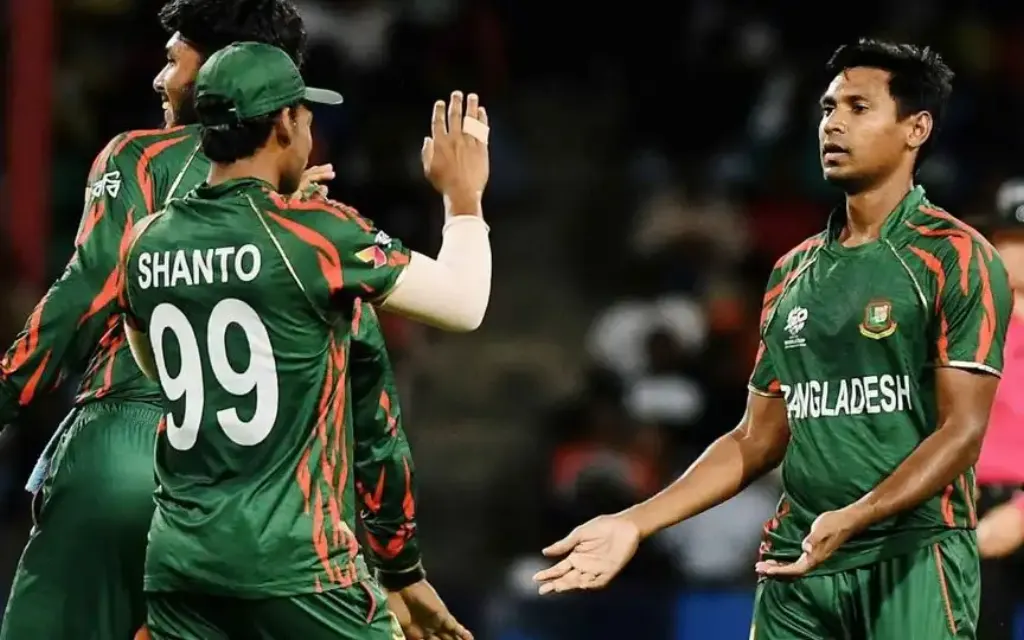
The recent Mustafizur Rahman controversy has highlighted the increasing political tensions between India and Bangladesh, affecting the cricketing landscape. After Rahman was removed from the Kolkata Knight Riders during the IPL, the Bangladesh Cricket Board (BCB) announced that the national team would not be participating in the upcoming T20 World Cup matches in India. This decision stems from dissatisfaction over his removal, which many believe was influenced by rising nationalist sentiments within India.
Related reading : Bangladesh Responds After Mustafizur Rahman’s Removal from KKR, Comments on IPL and World…
In the wake of diplomatic strains, marked by allegations of minority oppression and security concerns, the BCB’s refusal to send its team underscores the seriousness of the situation. The Indian Cricket Board faced backlash for its decision, which several politicians labeled as a politically charged move that disregarded the integrity of sports. Critics argue that both nations should prioritize cricket over political differences, but the future of their cricketing relationship now lies in uncertainty.
The recent removal of Bangladesh’s fast bowler Mustafizur Rahman from the Kolkata Knight Riders (KKR) team has ignited a firestorm of controversy rooted in the political tensions between India and Bangladesh. This incident not only highlights the mounting bilateral issues but also raises questions about the impact of politics on the beloved sport of cricket. With the backdrop of social media trolling and diplomatic strains, the cricketing arena has become a microcosm of the larger geopolitical landscape.
Related reading : Bangladesh’s Stark Warning After Mustafizur Rahman’s IPL Omission: Calls to Shift T20…
The Timeline of Controversy
In December 2025, Mustafizur Rahman was bought by the Kolkata Knight Riders for a whopping ₹9.20 crores during the IPL auction. However, following protests from several Hindu nationalist organizations in India, arguing that his inclusion overlooked the sentiments of Indian citizens, the BCCI ordered KKR to release him from the squad. This move prompted significant backlash and further complicated the already fraught diplomatic relations between the two nations.
The Political Backdrop
Diplomatic relations between India and Bangladesh have been deteriorating over the past 18 months, primarily due to issues surrounding the alleged persecution of minorities and safety concerns for diplomatic missions. These political issues have gradually seeped into the realm of sports, culminating in the recent decision by the Bangladeshi cricket board to decline participation in the upcoming T20 World Cup matches scheduled in India.
The Response from Bangladesh
In light of the political turmoil and the removal of Mustafizur, the Bangladesh Cricket Board (BCB) decided that the national team would not travel to India for the World Cup. They formally requested the ICC to transfer their matches to Sri Lanka, illustrating the seriousness with which they view the cricketing fallout from political decisions. This dramatic pivot indicates a decisive moment in the cricketing history of both nations.
Domestic Reactions and Media Coverage
Reactions from both sides of the border have been intense. Indian politicians, including Congress MP Shashi Tharoor, condemned the BCCI’s decision as “irresponsible,” suggesting that it politicized what should be a sporting matter. Meanwhile, Bangladesh’s response has leaned toward a defensive posture, arguing that their decision was justified, especially given the atmosphere of hostility surrounding Mustafizur’s entry into the IPL.
The Broader Implications for Cricket Diplomacy
The controversy surrounding Mustafizur Rahman isn’t just a localized incident; it reflects a long-standing trend where cricket diplomacy is increasingly influenced by political ideologies and sentiments. Previously, India-Pakistan cricket matches have also been marred by politics, but this is the first instance illustrating how strained relations between India and Bangladesh can lead to similar consequences. Analysts are beginning to question whether sports can still act as a unifying force when overshadowed by political developments.
Related reading : Bangladesh to Skip India Tour Ahead of T20 World Cup Following Mustafizur Rahman…
Comparisons to Past Incidents
Historically, cricket has been a platform for diplomacy among countries with tense relationships. Previous instances like the cricketing ties between India and Pakistan demonstrate how matches can become a matter of national pride. The current Mustafizur Rahman drama warns that such dynamics can easily pivot towards conflict if not managed properly. For a glimpse into the India-Pakistan cricket rivalry, please visit here.
The Way Forward
For cricket to thrive in a politically charged environment, all stakeholders must prioritize unity over division. The BCB’s actions suggest a refusal to remain passive in the face of governmental pressures, opting instead for a position of strength. Despite the ongoing tumult, it’s essential that the core spirit of cricket—promoting friendship and camaraderie—rings true, especially in times of strife.
As we look ahead to the T20 World Cup and the future of Bangladesh’s cricketing relationships, the path isn’t just a matter of sportsmanship; it requires diplomatic finesse and a commitment to tackling underlying issues head-on. As tensions simmer, we can only hope that both nations remember the role cricket has played in fostering goodwill amidst discord.
In summation, the Mustafizur Rahman Controversy serves as a cautionary tale, illustrating how political realities can infiltrate and shape the beloved game of cricket. For further discussions on international relations and sports, see here.
Mustafizur Rahman Controversy
Read next
 Cricket News
Bangladesh to Skip India Tour Ahead of T20 World Cup Following Mustafizur Rahman Controversy
The Bangladesh Cricket Board (BCB) has announced that the national team will not tour India for the upcoming T20 World
 Cricket News
Bangladesh Responds After Mustafizur Rahman’s Removal from KKR, Comments on IPL and World Cup Matches
In a significant decision, the Board of Control for Cricket in India (BCCI) instructed the Kolkata Knight Riders (KKR) t
 Cricket News
Bangladesh’s Stark Warning After Mustafizur Rahman’s IPL Omission: Calls to Shift T20 World Cup Matches from Sri Lanka
Following the release of Bengali fast bowler Mustafizur Rahman from the Kolkata Knight Riders in accordance with the dir
Mustafizur Rahman Shines Bright After IPL Exit, Achieves Major Milestone in T20 Cricket
Mustafizur Rahman has recently created a significant stir in cricket circles following his exit from the Indian Premier